Key takeaways
- Three kinds of spintronic product are on sale: read heads in hard drives, MRAM memory chips and magnetic sensors. Spin-based logic is still research.
- Two listed companies that sell mostly spintronic parts publish revenue. Everspin reported $55.2 million for 2025. NVE reported $26.3 million for the year to 31 March 2026. The two together are $81.5 million.
- Hard-disk read heads are probably the largest spintronic product by value, but no filing we read reports their revenue. Seagate ($12.2 billion) and Western Digital ($12.9 billion) report company revenue, which is a different thing.
- Four report vendors put the market at $0.87 billion to $4.8 billion for 2024, and at $2.03 billion for 2025. Their scopes differ, and two of the four do not match their own growth rates.
- Before you quote a market size, check what the vendor counted, which year it measures, and whether the forecast follows from its own growth rate.
Everspin and NVE, two listed companies that sell mostly spintronic products, reported a combined $81.5 million of revenue in their latest financial years. That is the audited floor under every “spintronics market” headline. The headlines themselves run from $0.87 billion to $4.8 billion for 2024, a spread of 5.5 times.
This article answers one reader question: how big is the spintronics market, and what is actually sold? It lists the products that ship, with the figures the companies themselves report. It then shows why report vendors disagree. The physics is in our explainer on how spintronics works, so it is not repeated here.
What is sold: spintronic products on sale in 2026
Spintronic devices use the spin of the electron, a tiny magnetic property, as well as its charge. The table lists each product family, the evidence that it ships, and the revenue that a company reports for it. A blank means no company reports the figure. Every figure is for the period named.
| Product | Evidence that it ships | Reported revenue or volume |
|---|---|---|
| Hard-disk read heads (tunnelling magnetoresistance, TMR) | Used in all hard drives made since about 2008-2009, per an Imperial College case study written for REF2014. Seagate says it designs and makes read/write heads. | None for heads. Seagate: revenue $12,195 million, 789 exabytes shipped (year to 3 July 2026). Western Digital: revenue $12,919 million (same year). |
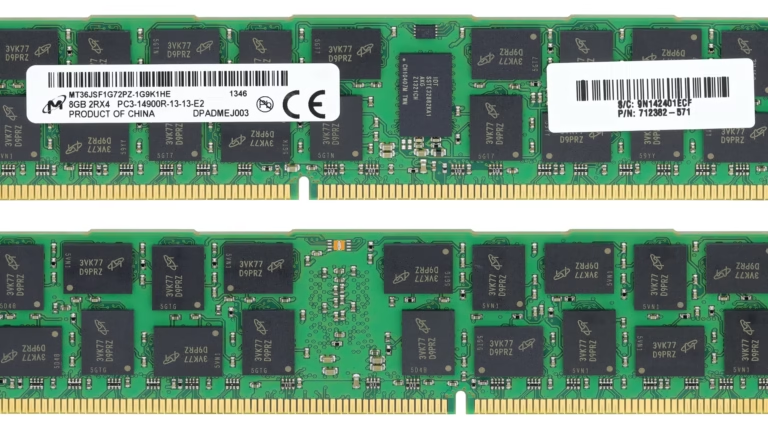
| Standalone MRAM, Toggle type | In production since 2008, shipping from 128 kilobit to 32 megabit, per Everspin’s 10-K. | Everspin does not split it out. Total revenue $55.2 million in 2025. |
| Standalone MRAM, spin-transfer torque (STT) type | Everspin ships 1 gigabit parts (production since 2017). Avalanche Technology sells space-grade MRAM. The 2023 IRDS roadmap names both as sellers. | Everspin: not split out. Avalanche: no figure found. |
| Embedded MRAM at foundries | Samsung said on 6 March 2019 that it had begun mass production on 28 nm FD-SOI. TSMC’s 16FFC eMRAM was “ready for production” in 2022. A TSMC 22 nm eMRAM array sits inside an Ambiq Apollo4 chip. GlobalFoundries made 22FDX eMRAM design kits available in 2017. | None. No foundry reports MRAM revenue. |
| Magnetic sensors (GMR and TMR) | NVE sells spintronic sensors and couplers. Allegro sells Hall-effect, GMR and TMR sensor chips. | NVE: $26.3 million total revenue, year to 31 March 2026. Allegro: $538.5 million magnetic-sensor sales (year to 27 March 2026), which include Hall-effect as well as GMR and TMR parts. |
| Spin-based logic | Not sold. Intel’s MESO design is a proposal in Nature (December 2018). | None. |
Everspin: the audited MRAM number
Everspin Technologies, based in Arizona, describes itself as a pioneer in the commercialisation of MRAM. Its annual report for 2025 (filed 4 March 2026) gives total revenue of $55.202 million. Of that, product sales were $48.292 million, or 87.5%. The rest was licensing, royalties and engineering services.
Revenue has not returned to its 2023 level. Revenue was $63.765 million in 2023, $50.402 million in 2024 and $55.202 million in 2025. That is a fall of 21.0% in 2024, a rise of 9.5% in 2025, and a net fall of 13.4% across the two years. Gross margin was 51.2% in 2025 and the company recorded a net loss of $0.6 million.
Everspin sold to more than 1,405 end customers in 2025. Its two largest together made up 33% of revenue. Everspin also sells die-level TMR sensors for 3D compasses. The filing does not split revenue between Toggle, STT-MRAM and sensors, so no one can say how much of the $48.3 million is each. It also says Everspin has licensed GlobalFoundries to offer embedded MRAM, and that GlobalFoundries pays Everspin a royalty on each wafer it sells containing qualified MRAM devices that use certain Everspin design information. So that embedded MRAM reaches Everspin as royalties, not product sales. Royalties of all kinds came to $0.774 million in 2025.
On 28 January 2026 Avalanche Technology sued Everspin in Delaware and filed an import complaint with the US International Trade Commission. Everspin’s filing says it denies the claims. Avalanche announced on 4 March 2026 that the Commission had voted on 27 February to open investigation 337-TA-1487. Nothing in the sources decides the case.
Hard drives: the read head has no revenue line
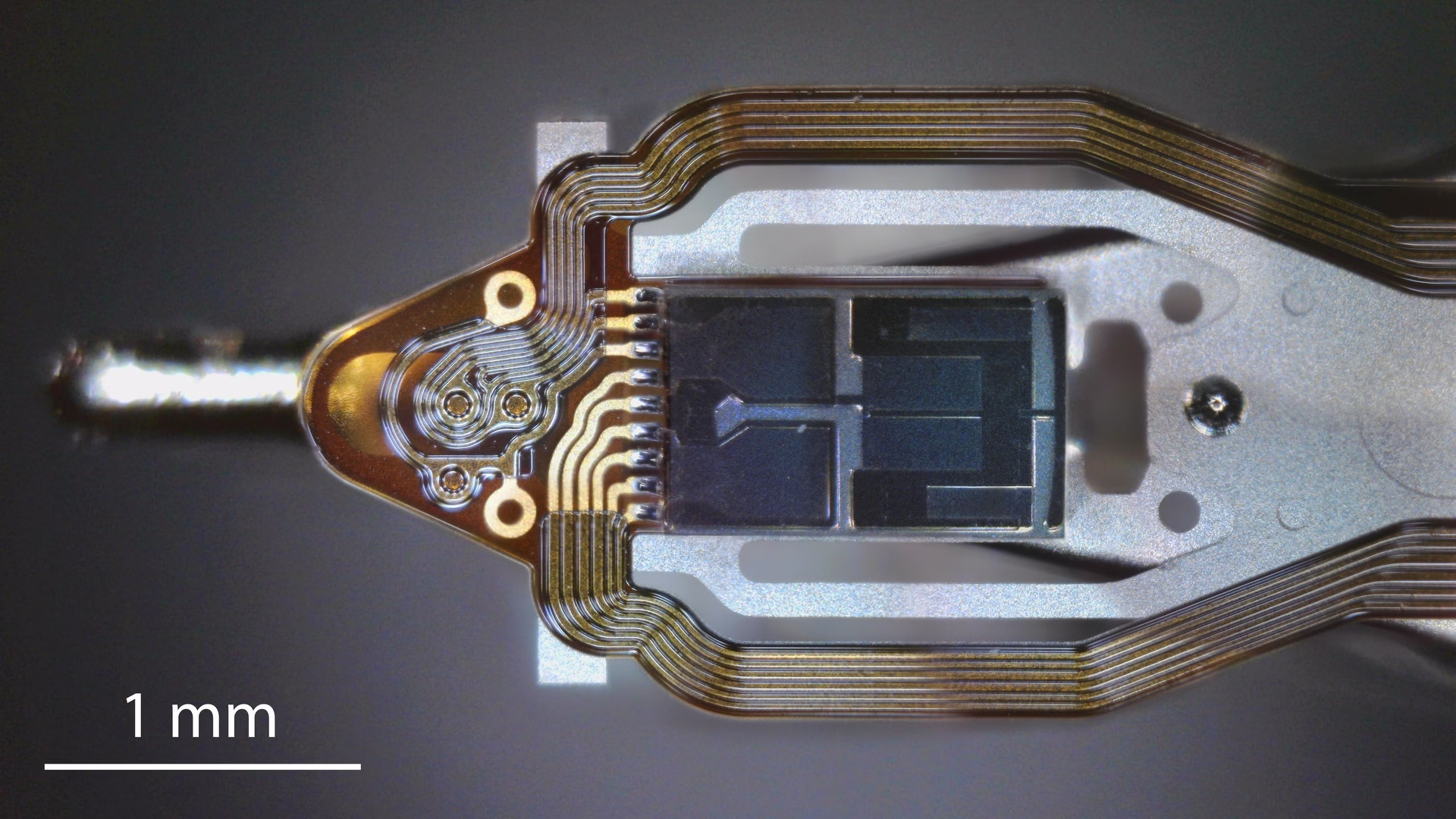
Hard-drive read heads sense data with a tiny magnetic tunnel junction: two magnetic layers separated by a very thin insulating layer. A case study that Imperial College London submitted to the UK’s REF2014 research assessment says such junctions were used in all computer hard drives made at the time. It quotes a letter from IBM: “All disk drives manufactured since about 2008-2009 use recording read heads based on magnetic tunnel junctions” (REF impact case study).
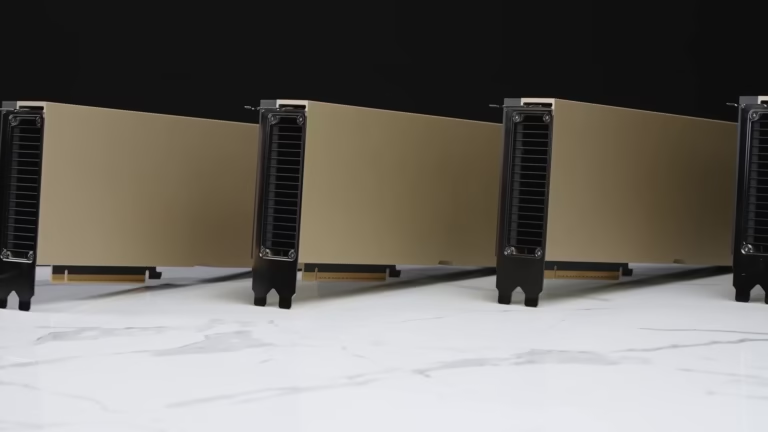
No filing gives a head count or head revenue, but the size of the drive business suggests the read head is the largest spintronic product by value (our inference). Seagate reported 789 exabytes shipped in its year to 3 July 2026, up from 595 exabytes, a rise of 32.6%. Its revenue was $12,195 million. Western Digital, now a pure hard-drive company since it separated its flash business in February 2025, reported net revenue of $12,919 million for the same year. The two together are $25,114 million.
Those are company revenues, almost all from drives and drive-based storage systems. A drive also holds platters, motors, a controller and a case. Neither filing gives the cost or revenue of the heads. A third maker, Toshiba, is not covered here. So the figure that would answer “how much spintronics is sold?” for hard drives is not in the filings we read.
Embedded MRAM: announced, qualified, rarely priced
Embedded memory sits on the same chip as the processor. Flash is hard to shrink for this job, so foundries offer MRAM instead. Samsung said on 6 March 2019 that it had begun mass production of its first commercial embedded MRAM on a 28 nm process, and claimed writes about 1,000 times faster than embedded flash (Samsung Newsroom).
TSMC’s 2022 annual report says its 16FFC embedded MRAM completed reliability testing and was ready for production, with automotive qualification expected in 2023. The same page says its embedded RRAM, a different memory type, reached volume production at several customers in 2022 (TSMC annual report 2022, page 97). A reader should note that wording. TSMC reports MRAM as ready and RRAM as in volume.
There is also a product teardown. TechInsights found 2 megabytes (16 megabits) of MRAM on the TSMC 22 nm ultra-low-leakage process inside the Ambiq Apollo4 microcontroller (TechInsights). GlobalFoundries announced on 20 September 2017 that design kits for 22FDX eMRAM were available, with risk production planned for the end of 2018 (EE Journal copy of the release). We found no GlobalFoundries statement of volume output.
The 2023 IEEE roadmap for devices and systems sums up the status. STT-MRAM “has entered the commercial production stage for both embedded and standalone” uses, it says (IRDS 2023, Beyond CMOS). None of the sources gives a revenue figure for foundry MRAM.
Magnetic sensors: NVE is small and Allegro is mixed
NVE Corporation, in Minnesota, says in its annual report that it makes spintronic sensors and couplers. For the year to 31 March 2026 it reported total revenue of $26,331,218. Product sales were $25,221,918, or 95.8%, and contract research made up the rest. Revenue rose 1.8% on the year before. Product sales rose 2.4%, which the company puts down to price rises and more purchases by existing customers. NVE sells through distributors in more than 75 countries.
Allegro MicroSystems is far larger. Its annual report gives net sales of $890.096 million for the year to 27 March 2026, up 22.8% from $725.006 million. Its magnetic-sensor sales were $538.538 million, up 13.5%, and the rest was power chips. But the sensor line mixes Hall-effect, GMR and TMR parts, and the filing does not separate the spintronic ones. Allegro bought the TMR developer Crocus on 31 October 2023. So $538.5 million is an upper bound for Allegro’s spintronic sensor sales, and the true figure is lower.
Get the next one by email
One new article a week on radiation, particles and the instruments that measure them, with its sources. No spam, unsubscribe any time.
Spin-based logic: still a proposal
Spin logic would replace transistors with magnetic devices. The best-known design is Intel’s magnetoelectric spin-orbit (MESO) device. The Nature paper, published online on 3 December 2018, says “we propose” the device. It describes progress on switching and detection. It then states projected gains over CMOS: switching energy lower by a factor of 10 to 30, switching voltage lower by a factor of 5, and logic density higher by a factor of 5 (Manipatruni et al., Nature).
Those are the authors’ projections for a device that was not yet a chip. The 2023 IEEE roadmap lists MESO among several magnetoelectric logic concepts. It says their delay will be limited by the switching speed of the magnetic layer, likely nanoseconds. No product or revenue exists, so spin logic adds nothing to a market figure today.
Why market-size reports disagree
Search for the market size and you find many pages from report vendors. They are vendor estimates, not audited facts, and the summary pages give no company-level build-up. Four of them are compared below. We recalculated each growth path from the vendor’s own figures.
| Vendor (page date) | Base-year figure | Vendor forecast | Our recalculation |
|---|---|---|---|
| IntelEvo Research (20 Nov 2025) | $0.87 billion (2024) | $6.12 billion by 2034 at 10.5% a year | At 10.5% a year, $0.87 billion reaches about $2.36 billion by 2034. Reaching $6.12 billion needs about 21.5% a year. |
| Polaris Market Research (undated page) | $1,174.99 million (2024) | $2,160.88 million by 2032 at 7.90% a year | Consistent: 7.90% for eight years gives about $2,159 million. |
| Straits Research (updated 24 Aug 2026) | $2.03 billion (2025) | $31.74 billion by 2034 at 35.73% a year | Consistent from its 2026 figure of $2.76 billion, about $31.8 billion by 2034. Its 2026 figure is 36% above 2025. |
| Strategic Market Research (Nov 2025) | $4.8 billion (2024) | $9.6 billion by 2030 at 10.5% a year | At 10.5% a year, $4.8 billion reaches about $8.74 billion by 2030. Reaching $9.6 billion needs about 12.2% a year. |
The three 2024 figures run from $0.87 billion to $4.8 billion. The top is 5.5 times the bottom. Scope explains some of the gap, and the pages show it. Strategic Market Research lists MRAM, spintronic sensors and quantum computing devices as product types. Polaris and Straits include electric-vehicle and industrial motor applications. Straits also lists hard disks and microwave devices. IntelEvo lists spintronic logic and quantum computing among its applications.
The audited numbers set a floor. Everspin plus NVE is $81.5 million, so even the lowest vendor figure is about 11 times that, and the highest is about 59 times. Our inference is that the rest is counted from sensors inside larger companies, from foundry MRAM, or from definitions the summary pages do not show. The pages do not say which.
Hard drives show how much the definition matters. Seagate and Western Digital revenue alone is $25.1 billion, more than any vendor’s base-year figure above. So the vendors cannot be counting whole drives. Whether they count heads, and at what price, is not visible from their public pages.
What to check before quoting a market size
- The scope. Does it cover MRAM only, sensors, hard-disk heads, or quantum devices? A figure for one is not a figure for another.
- What is counted. The value of the spintronic die is far smaller than the value of the drive or car that contains it.
- The year. A 2025 base year and a 2024 base year are not comparable, and a forecast made from a different base year is not either.
- The arithmetic. Apply the stated growth rate to the base year. Two of the four vendors above fail this test.
- The floor. Compare the figure with Everspin and NVE. If it is 50 times larger, ask the vendor where the difference sits.
What to watch
These are dated checkpoints, not forecasts.
- Everspin’s next annual report. The 2025 report was filed on 4 March 2026 and showed product sales up 14.4%. The next one will show whether that continued, and how the Avalanche case stands.
- NVE’s fiscal 2027 report. The fiscal 2026 report was filed on 6 May 2026.
- Spin-orbit torque MRAM, which writes through a separate path from the one it reads. The 2023 IEEE roadmap calls it “at rather early stage of research” and notes sub-nanosecond writing demonstrated in labs. On 17 January 2024 ITRI announced a research SOT-MRAM array developed with TSMC that, it said, uses about 1% of the power of STT-MRAM, according to press reports (TVBS, Blocks and Files). We have not seen ITRI’s release or the IEDM paper. It is a research result, not a product.
- The next IEEE roadmap update, which is where status changes from research to production get recorded.
Sources
- Everspin Technologies, annual report on Form 10-K for 2025 (filed 4 March 2026)
- Everspin Technologies, annual report on Form 10-K for 2024 (filed 27 February 2025)
- NVE Corporation, annual report on Form 10-K for the year to 31 March 2026 (filed 6 May 2026)
- Allegro MicroSystems, annual report on Form 10-K for the year to 27 March 2026 (filed 21 May 2026)
- Seagate Technology Holdings, annual report on Form 10-K for the year to 3 July 2026
- Western Digital, annual report on Form 10-K for the year to 3 July 2026
- Imperial College London, REF2014 impact case study: a redesigned read head used in all hard-disk drives
- Samsung Newsroom, eMRAM on 28nm FD-SOI (6 March 2019)
- TSMC 2022 annual report, page 97
- TechInsights, TSMC 22ULL eMRAM die removed from Ambiq Apollo4
- EE Journal, GlobalFoundries 22FDX eMRAM availability (22 September 2017)
- IEEE IRDS, 2023 update, Beyond CMOS
- S. Manipatruni et al., “Scalable energy-efficient magnetoelectric spin-orbit logic”, Nature 565 (online 3 December 2018)
- Avalanche Technology, ITC institutes investigation (4 March 2026)
- Avalanche Technology, company website
- Blocks and Files, TSMC and ITRI unveil SOT MRAM (22 January 2024)
- TVBS News, ITRI and TSMC unveil SOT-MRAM chip technology (17 January 2024)
- IntelEvo Research, Spintronics Market
- Polaris Market Research, Spintronics Market
- Straits Research, Spintronics Market
- Strategic Market Research, Spintronics Market
Cite this article
Turner, A. (2026, November 4). Spintronics Market Size: What Is Actually Sold in 2026. ScienceShot. https://scienceshot.com/post/spintronics-market-what-is-sold
Turner, Alex. “Spintronics Market Size: What Is Actually Sold in 2026.” ScienceShot, 4 Nov. 2026, scienceshot.com/post/spintronics-market-what-is-sold.
Turner, Alex. “Spintronics Market Size: What Is Actually Sold in 2026.” ScienceShot, November 4, 2026. https://scienceshot.com/post/spintronics-market-what-is-sold.
@online{scienceshot-spintronics-market-what-is-2026,
  author       = {Turner, Alex},
  title        = {{Spintronics Market Size: What Is Actually Sold in 2026}},
  organization = {ScienceShot},
  date         = {2026-11-04},
  year         = {2026},
  url          = {https://scienceshot.com/post/spintronics-market-what-is-sold}
}
https://scienceshot.com/post/spintronics-market-what-is-sold
Get one article a week
One new article a week on radiation, particles and the instruments that measure them, with its sources. No spam, unsubscribe any time.