
SiPM vs PMT: Why Silicon Hasn’t Won Everywhere Yet
SiPM vs PMT: silicon crushes tubes on voltage and size, but tubes still win on raw light-collecting area. My verdict, from CERN.

SiPM vs PMT: silicon crushes tubes on voltage and size, but tubes still win on raw light-collecting area. My verdict, from CERN.
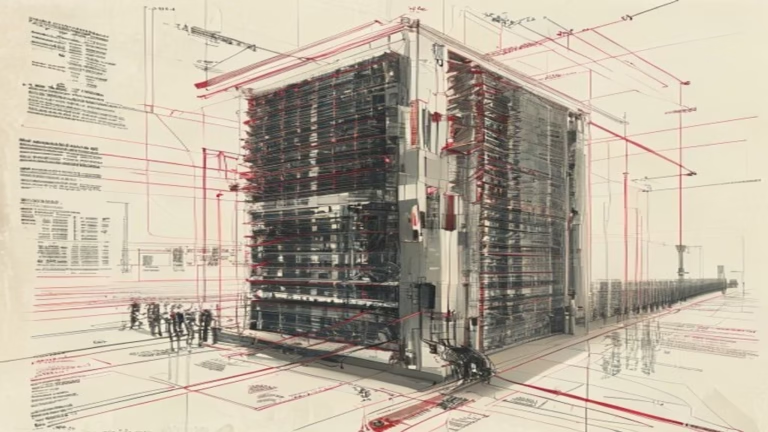
The AI data center power bottleneck—not chips—is 2026's real ceiling: grid queues, 150 kW racks, and water now decide who wins.
Everyone's cheering GPT-5.6 Sol's 750 tokens per second. They're missing it: wafer-scale inference means OpenAI is quietly retiring the GPU cluster for its frontier model, and rewriting the physics of the AI data center.
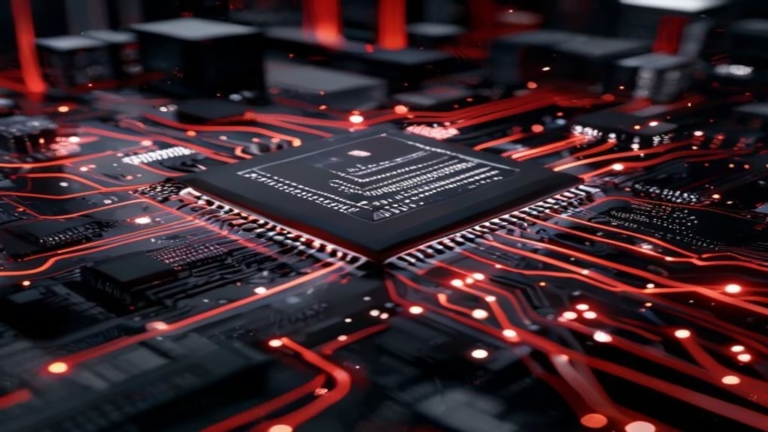
Everyone is cheering co-packaged optics for saving power. They are missing the real story: the pluggable transceiver, the most-swapped part in any AI data center, is being quietly executed.
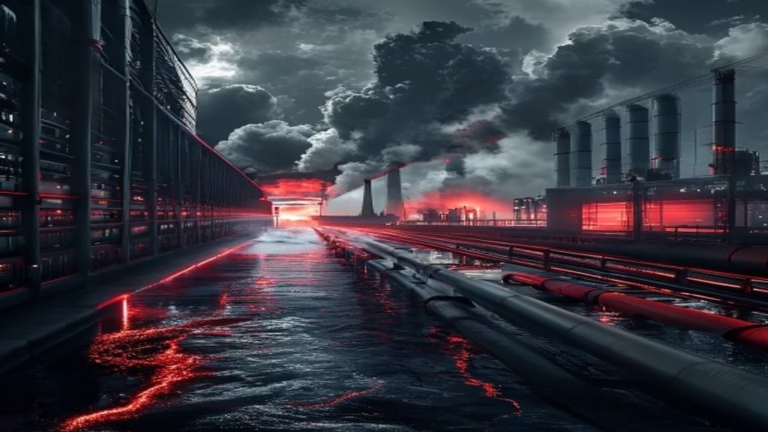
Nvidia and Microsoft say they've crushed AI data center water use. They're right, inside the walls. But the water did not disappear; it evaporated at the power plant instead, invisibly and at scale.

Webb's latest data on interstellar comet 3I/ATLAS reveals a 12-billion-year-old cosmic visitor carrying deuterium 30 times higher than any solar system comet — and chemistry unlike anything we have ever known.
The AI data center boom has officially gone parabolic: global spending is crossing the $1 trillion mark in 2026, power demand is set to double, and the grid can't cope.
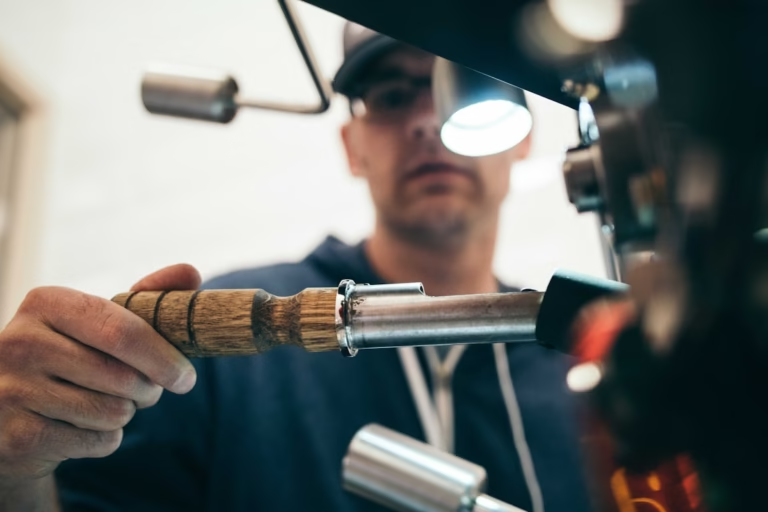
AI racks now generate 100 kW of heat per cabinet. Liquid cooling has gone from a curiosity to a survival strategy — here's why the entire industry is making the switch.
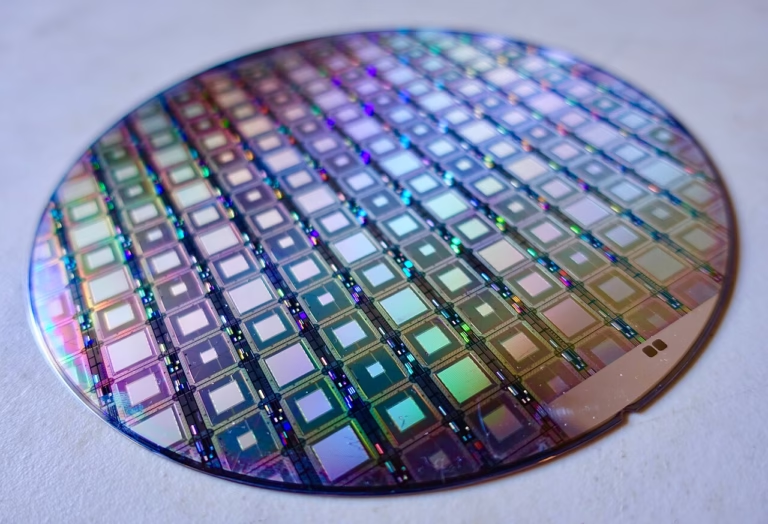
Microsoft's Majorana 2 chip swaps aluminum for lead, boosting topological qubit parity lifetimes by 1,000-fold to 20 seconds. One material change that could redefine the road to fault-tolerant quantum computing.
In vivo CRISPR gene editing has achieved its first Phase 3 victory: a single injection of lonvo-z cut hereditary angioedema attacks by 87%, with 62% of patients remaining entirely attack-free.