The lowest two-qubit gate error measured on any qubit platform is 0.0084%, a fidelity of 99.9916%, set by Oxford Ionics on trapped ions in October 2025. The superconducting record stands at 0.06% (Maryland and Wisconsin, July 2024), the neutral-atom record at 0.15% (Harvard, April 2026) and the spin-qubit record at 0.19% (Princeton, November 2021). Those four numbers are the record rows of the ScienceShot qubit performance ledger, 357 measurements read in the papers that report them, and the chart below shows how each record fell from 2016 to 2026.
Key takeaways
- The lowest two-qubit gate error ever measured is 0.0084% (fidelity 99.9916%), set on trapped ions by Oxford Ionics in October 2025, about ten times below the 2016 NIST record of 0.08%.
- The superconducting record went from 0.9% in 2016 to 0.06% in July 2024. The best result of each year halved about every 1.7 years, and no new record has come in over two years.
- Neutral atoms moved fastest lately, from 0.5% in 2023 to 0.15% at Harvard in April 2026.
- Spin qubits have sat at 0.19% error (99.81%) since November 2021, five years without a new record.
The record on each platform
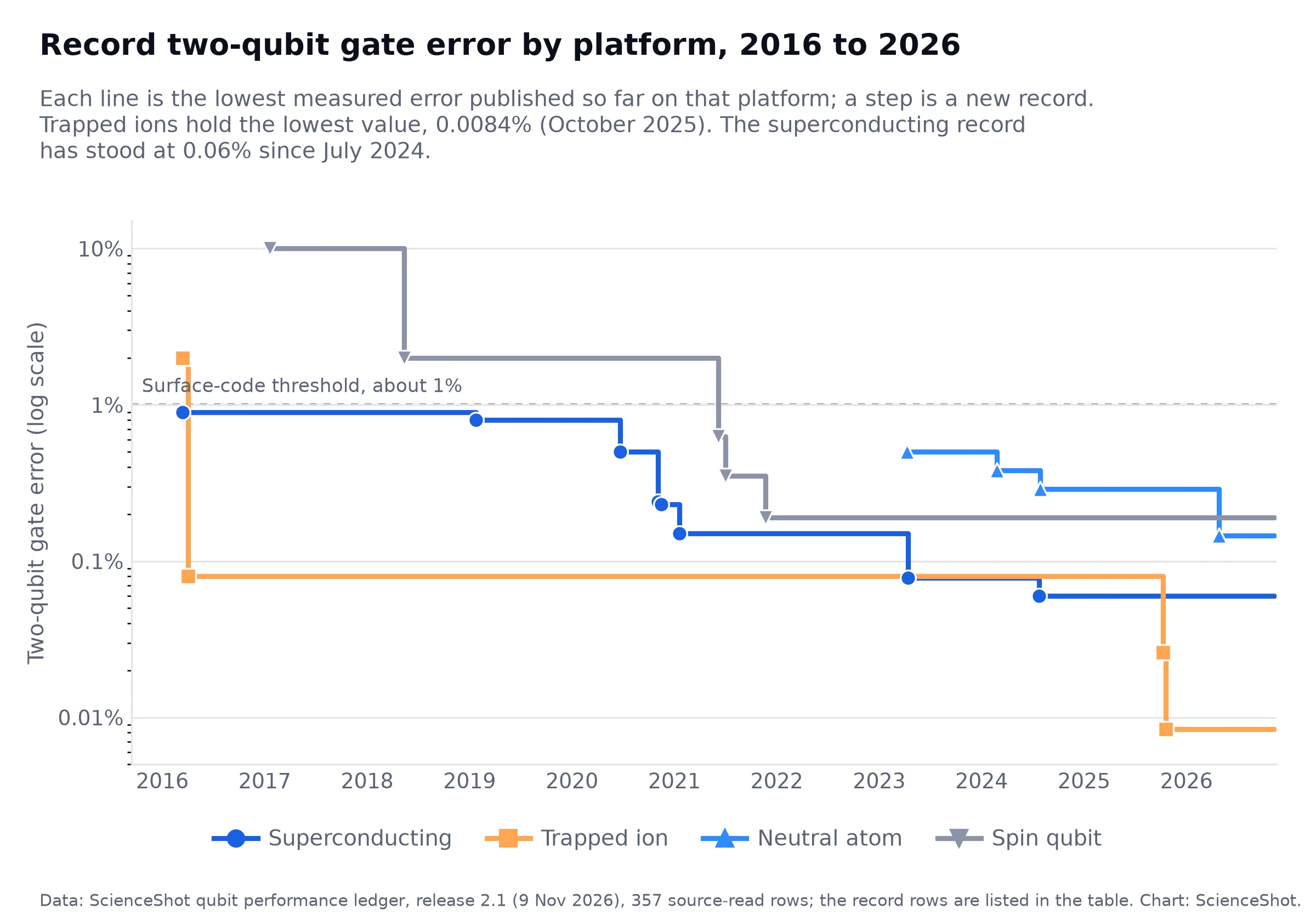
A record here is the lowest error reported as measured on that platform up to that date, whatever the gate or benchmark. The table lists every row that set one. Fidelity is the figure the papers quote; the error is simply one minus that fidelity.
| Platform | Date | Gate error | Fidelity | Group | Source |
|---|---|---|---|---|---|
| Superconducting | Mar 2016 | 0.9% | 99.1% | IBM T.J. Watson Research Center | Sheldon et al., arXiv:1603.04821 |
| Superconducting | Jan 2019 | 0.8% | 99.2% | Rigetti Computing | Hong et al., arXiv:1901.08035 |
| Superconducting | Jun 2020 | 0.5% | 99.5% | Southern University of Science and Technology | Xu et al., arXiv:2006.11860 |
| Superconducting | Nov 2020 | 0.24% | 99.76% | Massachusetts Institute of Technology | Sung et al., arXiv:2011.01261 |
| Superconducting | Nov 2020 | 0.23% | 99.77% | IBM | Kandala et al., arXiv:2011.07050 |
| Superconducting | Jan 2021 | 0.15% | 99.85% | IBM Quantum | Stehlik et al., arXiv:2101.07746 |
| Superconducting | Apr 2023 | 0.078% | 99.922% | Massachusetts Institute of Technology | Ding et al., arXiv:2304.06087 |
| Superconducting | Jul 2024 | 0.06% | 99.94% | University of Maryland, College Park | Lin et al., arXiv:2407.15783 |
| Trapped ion | Mar 2016 | 2% | 98% | University of Maryland (JQI) | Debnath et al., arXiv:1603.04512 |
| Trapped ion | Mar 2016 | 0.08% | 99.92% | NIST Boulder | Gaebler et al., arXiv:1604.00032 |
| Trapped ion | Oct 2025 | 0.026% | 99.974% | University of Oxford | Sutherland et al., arXiv:2510.09508 |
| Trapped ion | Oct 2025 | 0.0084% | 99.9916% | Oxford Ionics (an IonQ company) | Hughes et al., arXiv:2510.17286 |
| Neutral atom | Apr 2023 | 0.5% | 99.5% | Harvard University, MIT, QuEra Computing | Evered et al., arXiv:2304.05420 |
| Neutral atom | Feb 2024 | 0.38% | 99.62% | Caltech | Finkelstein et al., arXiv:2402.16220 |
| Neutral atom | Jul 2024 | 0.29% | 99.71% | Caltech | Tsai et al., arXiv:2407.20184 |
| Neutral atom | Apr 2026 | 0.146% | 99.854% | Harvard University | Evered et al., arXiv:2604.25987 |
| Spin | Jan 2017 | 10% | 90% | Harvard University | Nichol et al., npj Quantum Inf. 3, 3 (2017) |
| Spin | May 2018 | 2% | 98% | UNSW Sydney | Huang et al., arXiv:1805.05027 |
| Spin | Jun 2021 | 0.63% | 99.37% | UNSW Sydney | Madzik et al., arXiv:2106.03082 |
| Spin | Jul 2021 | 0.35% | 99.65% | QuTech, Delft University of Technology | Xue et al., arXiv:2107.00628 |
| Spin | Nov 2021 | 0.19% | 99.81% | Princeton University | Mills et al., arXiv:2111.11937 |
Get the next one by email
One new article a week on radiation, particles and the instruments that measure them, with its sources. No spam, unsubscribe any time.
Superconducting: a halving every 1.7 years, then a pause
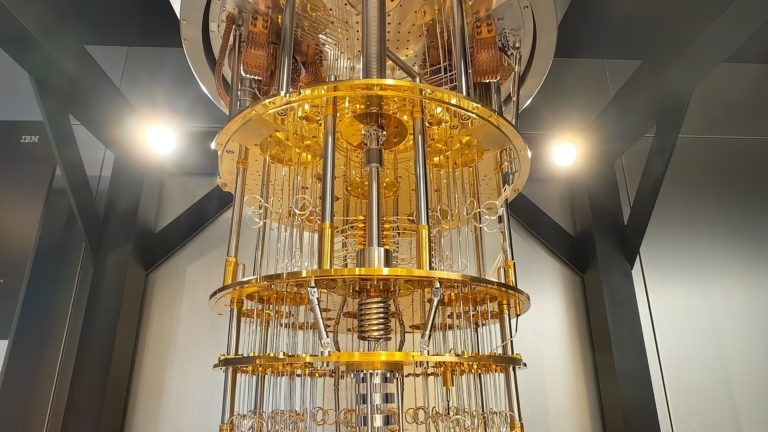
Superconducting qubits have the longest and densest record in the ledger, 53 comparable measurements, with a result in every year from 2016 to 2026. The record fell from 0.9% (IBM, March 2016) to 0.06% for an inductively coupled fluxonium pair at the University of Maryland in July 2024, a factor of 15. Taking the best measurement of each year, the error halved about every 1.7 years; dropping any one year from the fit moves that figure between 1.4 and 1.9 years.
The record has not moved since. By the ledger’s date, 9 Nov 2026, it had stood for 2.3 years, the longest pause since the 2016 to 2019 gap. If the yearly trend holds, the superconducting record reaches 0.01% around 2030. If the pause is the new normal, it does not.
Trapped ions, neutral atoms and spin qubits
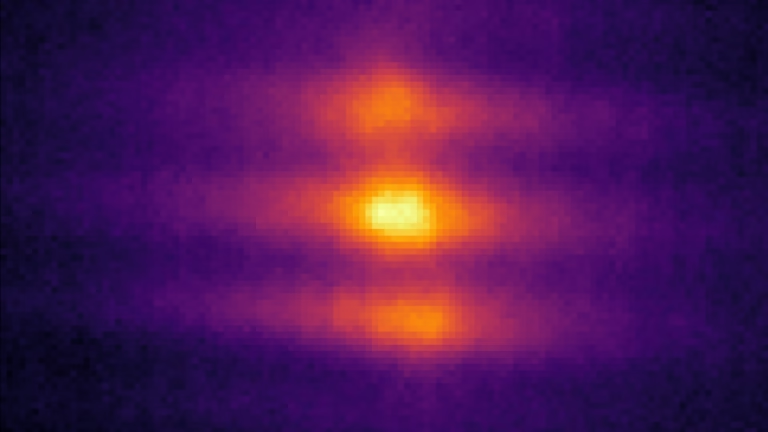
Trapped ions hold the lowest measured error. The 2016 NIST beryllium gate at 0.08% stayed the record for nine years, then two Oxford results in October 2025 took it to 0.026% and, ten days later, to 0.0084% with a gate that needs no ground-state cooling. The ion record is now about ten times below where it stood in 2016. Because it moved in two jumps, a yearly fit swings between a 3.7 and a 7.7 year halving depending on which year is dropped, so the ledger publishes no trend for ions.
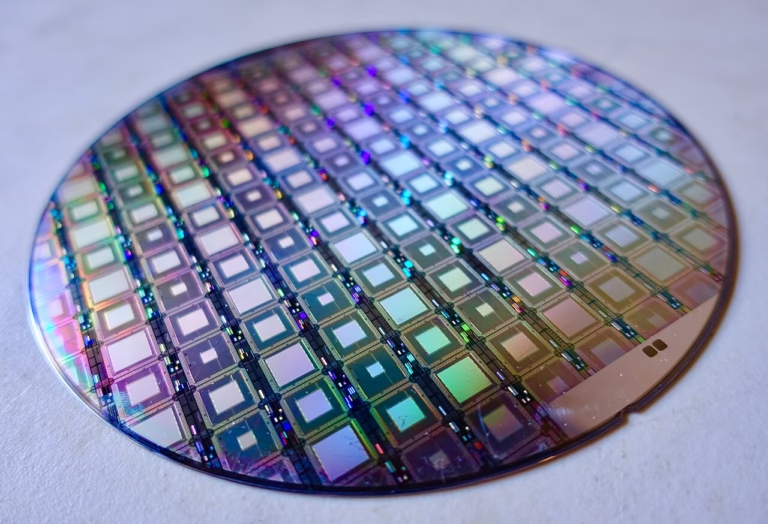
Neutral atoms entered the ledger’s gate-error series in 2023 at 0.5% (Harvard, MIT and QuEra, 60 atoms in parallel), passed through two Caltech strontium results in 2024 and reached 0.15% at Harvard in April 2026, a factor of 3.4 in three years. Spin qubits started furthest back, 10% in a gallium arsenide double dot in 2017, then improved 50 times to 0.19% in a Princeton silicon-germanium device in November 2021. Nothing lower has been measured since: five years without a record.
Why 0.1% and 0.01% matter
Gate error is the number that decides whether error correction pays off. The surface code, the scheme most hardware groups build towards, tolerates a physical error rate of about 1% per operation (Wang, Fowler and Hollenberg, 2011; Fowler et al., 2012). Just below that threshold each logical qubit costs a very large number of physical qubits; the count falls steeply as the error drops, and the planning case in Fowler’s paper assumes gates ten times below threshold, near 0.1%. Every platform in the table is now under 1%, two are under 0.1%, and only trapped ions are near 0.01%, where the overhead shrinks again. Our explainer on the threshold theorem works through the arithmetic; the qubit coherence and gate fidelity calculator turns a device’s T1 and T2 into the gate error it can reach.
Finding SSF-001 of the ScienceShot discovery desk. It is recomputed on every ledger release and revised, with a date, if the records move.
Cite this: ScienceShot, Two-qubit gate fidelity records by platform, 2016 to 2026 (finding SSF-001), November 2026, scienceshot.com/post/two-qubit-gate-fidelity-records-by-platform-2016-2026.
Data: ScienceShot qubit performance ledger, release 2.1 (9 Nov 2026), 357 source-read rows; each record row links its paper.
Cite this article
Turner, A. (2026, November 9). Two-qubit gate fidelity records by platform, 2016 to 2026. ScienceShot. https://scienceshot.com/post/two-qubit-gate-fidelity-records-by-platform-2016-2026
Turner, Alex. “Two-qubit gate fidelity records by platform, 2016 to 2026.” ScienceShot, 9 Nov. 2026, scienceshot.com/post/two-qubit-gate-fidelity-records-by-platform-2016-2026.
Turner, Alex. “Two-qubit gate fidelity records by platform, 2016 to 2026.” ScienceShot, November 9, 2026. https://scienceshot.com/post/two-qubit-gate-fidelity-records-by-platform-2016-2026.
@online{scienceshot-two-qubit-gate-fidelity-2026,
  author       = {Turner, Alex},
  title        = {{Two-qubit gate fidelity records by platform, 2016 to 2026}},
  organization = {ScienceShot},
  date         = {2026-11-09},
  year         = {2026},
  url          = {https://scienceshot.com/post/two-qubit-gate-fidelity-records-by-platform-2016-2026}
}
https://scienceshot.com/post/two-qubit-gate-fidelity-records-by-platform-2016-2026
Get one article a week
One new article a week on radiation, particles and the instruments that measure them, with its sources. No spam, unsubscribe any time.